
A checkmark tells you one thing: you did the habit today. Useful, but thin. A habit tracker with statistics tells you the part you can't see from a single day, whether you're actually getting more consistent or quietly sliding, which habit is dragging the others down, and which day of the week keeps breaking your streak. The numbers turn a stack of ticks into feedback you can act on.
The trap is treating statistics as a scoreboard to admire instead of a diagnostic to read. Done right, they tell you exactly where to intervene before a wobbling habit becomes a dead one.
The numbers actually worth reading
Most stats screens show a dozen figures and only a few earn their place. The ones that change what you do:
- Completion rate over a window. "78% over the last 30 days" is the single most honest measure of a habit. A streak hides the misses behind it; a completion rate counts them. Watch the trend, not the number: a rate climbing month over month means the habit is taking hold.
- Current and longest streak. The current streak is the thing you're protecting day to day. The longest is the proof you've done it before, which matters a lot on the day you're tempted to give up.
- Best and worst days. Patterns by weekday expose the structural problem. If Saturdays are a graveyard for your gym habit, that's not a willpower failure, it's a scheduling one, and you can fix scheduling.
- Time-of-day patterns. When you tend to complete a habit tells you when to anchor it, and when to stop fighting a slot that never works.
Each of those answers a question a single checkmark can't. Together they're the difference between guessing why a habit is slipping and knowing.
The heatmap is the statistic you'll read most
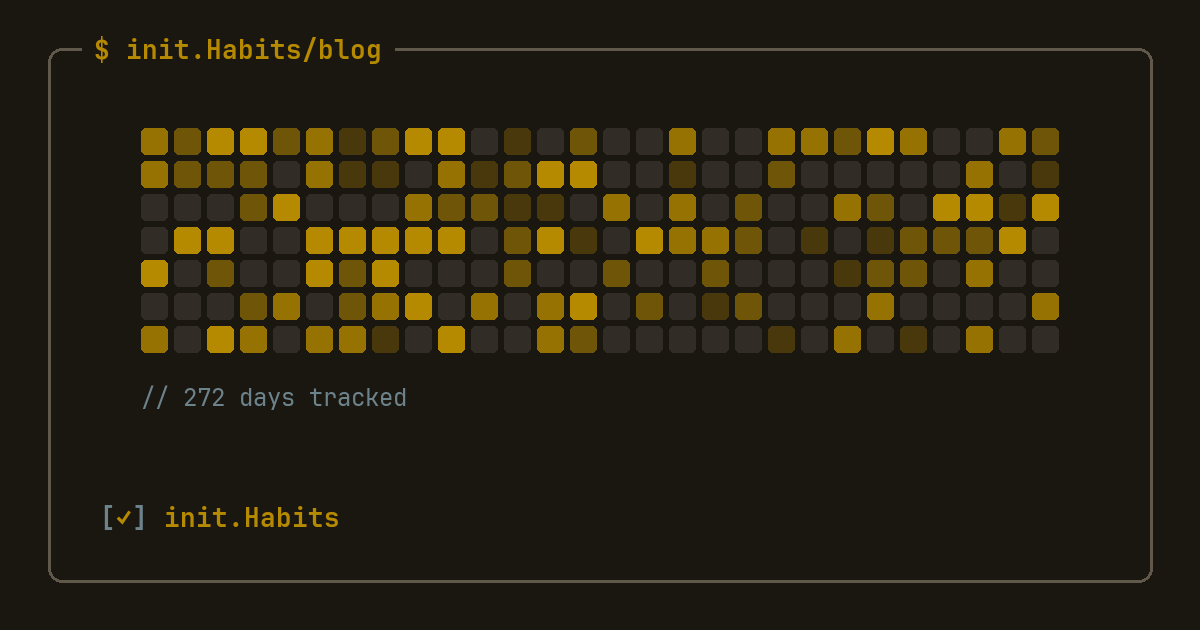
The most-used statistic in any good tracker isn't a percentage, it's a picture. A GitHub-style heatmap compresses months of completion into one glance: dense green means it's working, a creeping field of pale squares means it isn't, long before any number would alarm you. That at-a-glance read is why the heatmap is the stat you'll check daily and the deeper breakdowns are the ones you'll check monthly.
Think of it as two layers. The heatmap is the dashboard light, instant, ambient, always visible. The analytics, completion rates, weekday patterns, streak history, are the diagnostic you open when the light tells you something's off. You don't need to study charts every day; you need the glanceable signal first and the detail on demand.
Read the stats to find the broken habit
The right use of statistics is detective work. When something feels off, the numbers tell you which habit and which day, not just that "you've been slacking." Maybe your overall consistency looks fine, but one habit's completion rate has quietly dropped from 90% to 50% over three weeks. That's the one to rescue, and you'd never have spotted it by feel, because the strong habits mask it.
This is why a habit tracker with statistics is most valuable when you're trying to get back on track. Instead of a vague sense that everything's fallen apart, you get a specific list: this habit is fine, this one's wobbling, this one died on Tuesdays. A vague problem is overwhelming. A specific one is fixable. The stats turn "I'm failing at everything" into "I need to move leg day off Saturday."
Turn it into a monthly review
Daily, glance at the heatmap and move on. Once a month, actually read the numbers. A short monthly review is where statistics earn their keep: look at each habit's completion rate, note which days keep failing, and make one structural change for the month ahead, re-time a habit, drop one that isn't serving you, lower a minimum that's too high. Seeing concrete progress is itself a motivator; the research behind the power of small wins shows that visible forward movement is one of the strongest drivers of staying engaged, and a month-over-month completion rate is small wins made countable.
Don't let the numbers become the point
Statistics can quietly corrupt a habit if you start optimising for the chart instead of the outcome. Grinding a streak number for its own sake, or padding completions with token efforts so the percentage stays high, means the stats are now lying to you, which defeats their entire purpose. The numbers are useful precisely because they're honest, so keep them honest.
That also means a bad day should stay a bad day, not get erased to protect a metric. This is where forgiveness and accuracy work together: a streak freeze keeps your run intact through a genuine off day without pretending you did the habit, so your completion rate stays truthful and your streak stays motivating. The goal was never a perfect spreadsheet. It's a habit that's actually taking hold, and good statistics are simply how you confirm it is.
FAQ
What statistics should a habit tracker show?
The ones that change what you do: completion rate over a rolling window, current and longest streak, best and worst days of the week, and time-of-day patterns. Those answer why a habit is or isn't sticking. A heatmap on top gives you the at-a-glance trend you'll read daily, while the detailed breakdowns are for a periodic review.
What's the difference between a streak and a completion rate?
A streak counts consecutive days and resets on a miss, so it motivates day to day but hides the gaps behind it. A completion rate is the percentage of days you actually did the habit over a window, so it's the more honest long-term measure. You want both: the streak to protect, the rate to tell you the truth.
How often should I look at my habit statistics?
Glance at the heatmap daily for the ambient signal, and do a proper read of the numbers about once a month. Studying charts every day rarely changes behaviour and can tip into optimising for the metric. A monthly review is enough to spot a slipping habit and make one structural fix.
Can statistics help me fix a habit that's slipping?
Yes, that's their best use. Stats pinpoint which specific habit is dropping and on which days, turning a vague sense of failure into a concrete, fixable problem. init.Habits surfaces per-habit completion rates and streak history with Pro so you can find the wobbling habit and re-time or shrink it before it dies.