
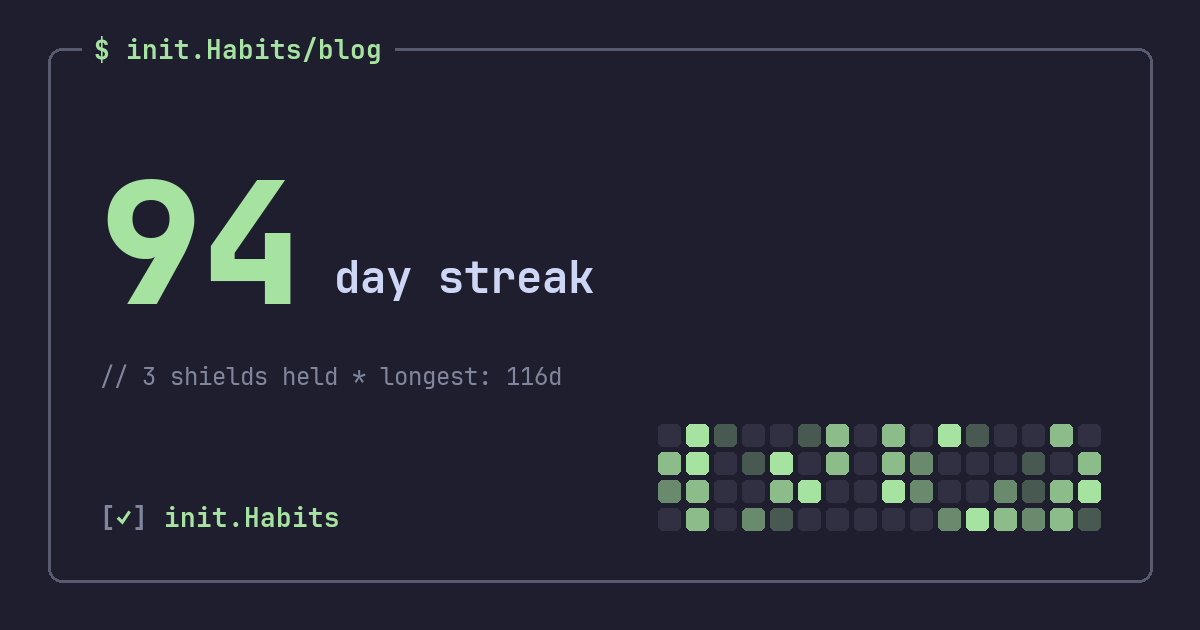
If you've ever used Duolingo, you've met a streak freeze: a little buffer that keeps your streak alive on a day you miss. The idea has quietly spread to habit trackers, and for good reason. A streak freeze is the single feature most likely to decide whether your streak survives a real, messy year, or resets to zero the first time life gets in the way. If you're still choosing an app, the streak tracker app guide compares how different trackers handle that exact moment.
But not all freezes are equal, and a badly designed one can do more harm than good. Here's how they actually work.
What a streak freeze actually does
A streak is a chain of consecutive days. Its great weakness is that one gap breaks the whole thing: miss a single day and the counter drops to zero, deleting weeks of work in one stroke. A streak freeze absorbs that gap. Instead of the chain snapping, a freeze is spent, the missed day is covered, and your streak continues as if nothing happened.
That's the entire mechanic, and it sounds small. It isn't, because the damage from a broken streak was never really about the missed day. It was about what the reset does to your motivation, the spiral where one slip makes you abandon the habit entirely. A freeze stops the spiral before it starts.
Free freezes vs earned freezes
There are two philosophies, and the difference matters more than it looks.
- Free or bought freezes are handed to you or sold in the shop. They protect the streak, but they don't feel like they cost anything, so the streak number slowly stops meaning much. If any day can be papered over for free, the chain is just decoration.
- Earned freezes accumulate only when you're consistent. You bank protection by actually doing the habit, so spending one feels like spending insurance you paid for. The streak stays meaningful because the freeze was, too.
Earned is the better design. It keeps the psychological weight of the streak intact while still forgiving the occasional bad day, which is exactly the balance a habit system needs.
Why this beats a perfect streak
Chasing an unbroken number sounds disciplined and is actually fragile. The research on habit formation backs this up: in the most-cited UCL study, missing a single day made no measurable difference to whether the habit eventually stuck. What matters is the overall frequency of the behaviour, not the cosmetic perfection of the chain. A freeze lets the number reflect that reality, rewarding consistency without punishing a normal human gap.
Without a freeze, your tracker is quietly optimising for the wrong thing. It treats the flu, a deadline week, and a forgotten log as identical catastrophes, and it teaches you that one bad day means the project is over. That's the opposite of what you want a tracking system to teach.
How to use a streak freeze well
A freeze is a safety net, not a hammock. To keep it useful:
- Spend one early, on purpose, the first time you miss. It teaches your brain the streak can take a hit and keep going.
- Don't treat freezes as permission to skip. They're for the days life genuinely intervenes, not for talking yourself out of the habit.
- For long disruptions, use a vacation or sick mode instead, so you're not draining freezes across a whole week away.
- Judge the heatmap, not just the freeze count. The shape of your month tells you more than any single number.
The line to watch
Not every tracker has one at all — a popular grid app like HabitKit resets on a miss with no freeze, one of the main reasons people compare it to init.Habits. Some go the other way: in Habitica, a missed daily actively damages your character, and the only guard is a rest mode you have to switch on in advance. The failure mode of streak freezes is over-forgiveness. If a tracker lets you undo any day with no cost, the streak stops being a signal and the habit loses its spine. The good designs draw a clear line: forgiveness for the genuine off day, friction for routine skipping. Earned freezes, capped sensibly, with separate modes for real breaks, land on the right side of that line.
How many freezes is the right number
A freeze system lives or dies on its cap. Too few and a single rough patch wipes a long streak anyway; too many and the streak stops meaning anything because nothing can ever break it. The sweet spot is enough to cover the normal texture of a real life, the odd sick day, the occasional forgotten log, without covering a genuine collapse of the habit. A small earned reserve that refills as you stay consistent tends to land in the right place: it forgives the human gaps and still expects you to actually do the thing most of the time. If you find yourself relying on freezes week after week, that's not a freeze problem, it's a sign the habit is too big or the schedule is wrong, and the fix is to resize the habit, not to stockpile more protection.
FAQ
What is a streak freeze in a habit tracker?
It's a buffer that protects your streak when you miss a day. Instead of resetting the count to zero, the tracker spends a freeze to cover the gap and the streak continues. init.Habits implements this as earned shields that accumulate while you stay consistent.
Are streak freezes cheating?
Earned ones aren't. A freeze you banked through consistent completions is closer to insurance than to cheating, you paid the premium in advance. Since habit formation depends on overall frequency rather than a flawless chain, covering an occasional miss doesn't undermine the habit.
How are streak freezes different from just not having streaks?
Streaks provide motivation and momentum; freezes keep that motivation from turning self-destructive after one slip. Dropping streaks entirely loses the upside. A streak with earned freezes keeps the reward while removing the all-or-nothing punishment.
Does Duolingo's streak freeze work the same way?
The principle is the same, a buffer that protects the streak on a missed day. The main difference between apps is whether freezes are free, bought, or earned. Earned freezes, like init.Habits' shields, keep the streak meaningful because the protection had to be worked for.