
There's a gap between the reader you mean to be and the stack of half-finished books on your nightstand. A reading habit tracker closes it the same way it closes any habit gap: by turning a vague intention, "read more," into a small, daily, trackable action you can't really argue with. The tracker doesn't make you read. It makes not reading visible, and visible is most of the battle.
The whole thing hinges on two unglamorous choices: a tiny page goal, and tracking it as a number instead of a checkbox.
"Read more" is not a habit
You can't check off "read more." There's no point at which it's definitively done, so there's nothing for a tracker, or your brain, to grab onto. "Read 10 pages" is different: it's falsifiable, you either did or you didn't, and that clarity is what makes it trackable at all. The habits that actually stick are always the concrete, countable ones. Vagueness is comfortable and useless.
Make the page count almost embarrassingly small
Set the daily goal lower than feels worth it, 10 pages, even one on a bad day. Small minimums are what keep a chain alive through tired evenings, and a chain that survives the tired evenings is the one that reaches a hundred days. The research on habit formation is blunt about this: consistency over a couple of months matters far more than the size of any single session. Ten pages a night is roughly a dozen books a year, built entirely out of days small enough that you never dread them.
A reading habit tracker counts numbers, not checkboxes
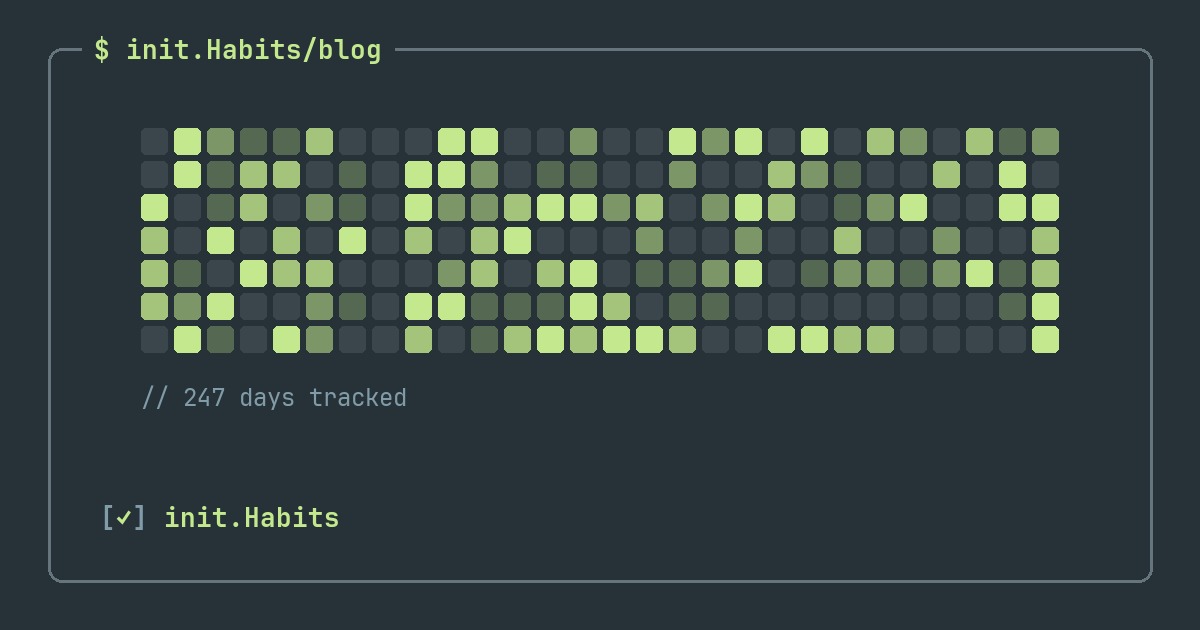
A checkbox flattens reading into done-or-not, which quietly encourages you to tick it after half a page. A number, "pages read," keeps you honest and lets a partial day count as the partial day it was. Better still, a number feeds a real picture over time: a GitHub-style heatmap of your reading year turns a hundred quiet evenings into one satisfying field of green, which is its own motivation to keep the squares filling.
How to build a daily reading habit
- Set a small page goal as a number habit, 10 pages, not "read more."
- Anchor it to an existing cue, like getting into bed, so you don't rely on remembering.
- Keep a one-page minimum for bad nights so the streak survives.
- Log the pages so partial days count and the heatmap fills honestly.
- Judge the month by the heatmap, not any single night.
Protect it from the busy weeks
Reading is usually the first habit to vanish when life gets loud, so it needs a plan for those weeks. A one-page minimum and a streak freeze for the genuinely impossible nights keep the habit alive through a deadline or a newborn or a move. The aim isn't a flawless record; it's that the habit still exists on the other side of a hard month. Jerry Seinfeld's old advice for daily work was simply don't break the chain, and a forgiving tracker is how you keep the chain intact when a perfect one would have snapped.
Audiobooks, ebooks, and what counts
People tie themselves in knots over what "really" counts as reading. The honest answer: whatever keeps the habit going. If audiobooks get you through a commute you'd otherwise spend scrolling, they count, track them as minutes instead of pages. Ebooks and paper are obviously fine. The only version that doesn't work is the purist one that makes the bar so high you stop entirely. The habit you're building is "engage with a book most days," and the format is a detail. Pick whatever lowers the friction for the life you actually have, and let the tracker measure consistency rather than enforce a definition.
What to do with a book you're not finishing
A stalled book is the quiet killer of reading habits. You don't want to read it, but you feel you "should" finish it, so you read nothing instead. Give yourself permission to abandon it. A reading habit is about the daily action, not about completing every book you start, and forcing yourself through a slog you hate is the fastest way to break the streak you've built. Put it down, pick something you actually want to read, and keep the chain alive. The goal was never a perfect finishing record; it was becoming someone who reads most days, and that person abandons books guilt-free.
FAQ
How do I build a reading habit that actually sticks?
Set a tiny, concrete daily goal like 10 pages, anchor it to an existing cue such as bedtime, keep a one-page minimum for bad nights, and track it so the streak motivates you. Small and consistent beats ambitious and abandoned.
Should I track pages or minutes when reading?
Either works; the key is tracking a number rather than a checkbox, so partial sessions count and you can see progress over time. Pages are concrete and easy to set a goal around. init.Habits supports number habits with a daily goal for exactly this.
How many pages a day is a good reading goal?
Start around 10, low enough to do on a tired night. That's roughly a dozen books a year, and the small target is what keeps the habit alive through busy weeks. You can always raise it once it's automatic.
How do I keep a reading streak during a busy week?
Drop to the one-page minimum and lean on a streak freeze for genuinely impossible nights. The goal is to keep the chain intact, not to read a lot every day. init.Habits' shields are built to cover those nights without resetting your streak.