
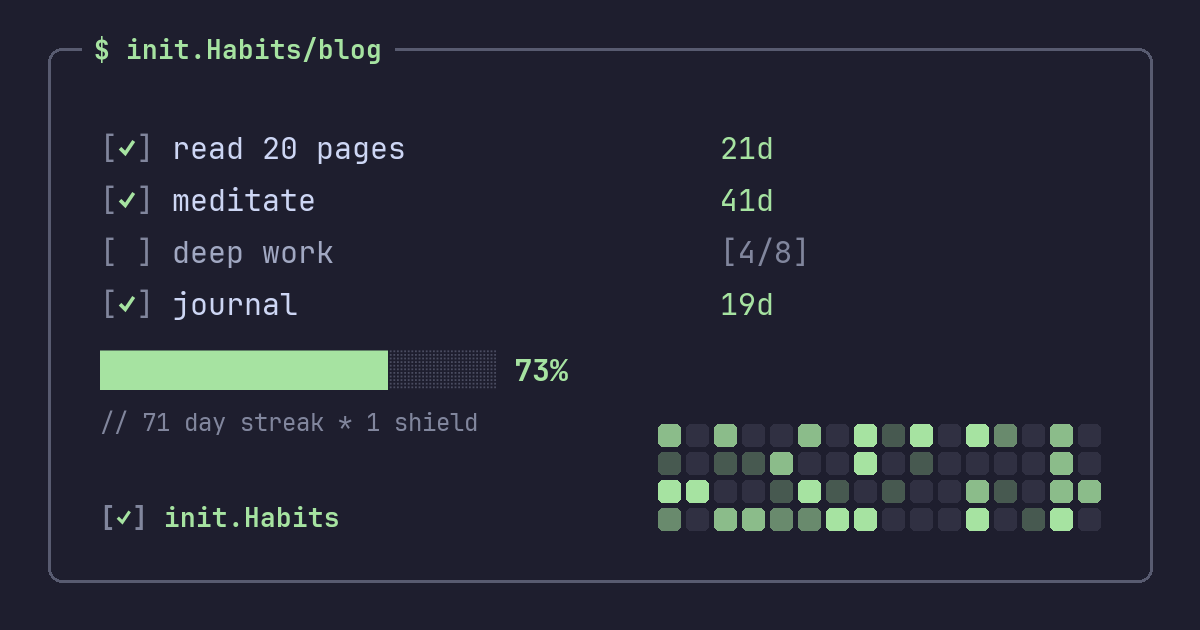
Most students think the problem is hours — that the people getting better grades simply grind longer. They usually don't. They study fewer hours with better technique, and the gap between them and everyone else is almost entirely about what they do in those hours, not how many. Good study habits aren't about studying more. They're about studying in the specific ways memory actually responds to, then doing those ways consistently enough that they become automatic.
This is about the techniques themselves and how to make them stick. If you want the practical setup — which app, what to track, how to survive exam weeks — that's the companion piece, the best habit tracker for students. Here we're one level down: what should you actually be doing in a study session, and how do you keep doing it. And if you're assembling the rest of the toolkit beyond the tracker itself, notes, flashcards, a focus timer, productivity apps for students rounds those up honestly, one app per job.
Why most studying barely works
The default study method is re-reading and highlighting, and it's close to useless. It feels productive — the page looks busy, the time passes — but rereading mostly builds familiarity, not memory. You recognize the material and mistake that for knowing it, then blank in the exam. The techniques that work all share one uncomfortable feature: they're effortful in the moment. The discomfort is the point. The harder your brain works to pull something up, the better it sticks, which is exactly why passive methods that feel smooth leave so little behind.
The study habits that actually move grades
A short list of high-leverage techniques beats a color-coded plan you abandon in week three:
| technique | what it is | how to track it |
|---|---|---|
| active recall | test yourself instead of rereading | a daily "recall session" checkbox |
| spaced practice | review across days, not in one block | a recurring review habit, a little each day |
| focused blocks | one subject, no phone, timed | a pomodoro timer habit |
| sleep | consolidation happens overnight | sleep pulled from Apple Health |
| one hard thing first | protect the first focused hour | a morning "deep work" checkbox |
- Active recall. Close the book and try to reproduce the material — flashcards, blank-page brain dumps, practice questions. Retrieving the answer is what burns it in, far more than seeing it again.
- Spaced practice. Revisit a topic across several days instead of cramming it once. A little every day beats a panic the night before, because spacing is how memory consolidates. This is the single habit that most separates students who remember things by exam day.
- Focused blocks. One subject, phone out of reach, for a set stretch. The cost of constant task-switching is real and well-documented — the research on multitasking shows it quietly wrecks the quality of focused work — so protect the block.
- Sleep. The least glamorous study habit and one of the most powerful. Cramming on no sleep trades tomorrow's recall for tonight's pages, a terrible deal during exams, because a lot of learning is consolidated while you sleep.
Track inputs, not grades
You can't "do" an A. Grades are outcomes, downstream of behaviour, and staring at them tells you nothing actionable on a Tuesday. Track the inputs instead: recall sessions done, review streak kept, focus minutes logged, hours slept. These are the levers you actually control, and watching them hold steady through a busy week is far more motivating than refreshing a gradebook. Sleep, food and movement belong on the same list, which is why good habits for students treats them as study infrastructure rather than self-care. Repetition is what turns a study technique into a default — the most-cited habit-formation study found behaviours become automatic through showing up over and over — so the goal is to make good technique a habit, not a one-off heroic session.
Make the habits survive exam weeks
Good study habits that only work in a calm September aren't good study habits. Term life is lumpy and unpredictable, and the week you most need your routines — exams — is the week everything competes for your attention. So build in the flex: use weekly goals for review that doesn't need to happen daily, set a tiny bad-day minimum for each habit (one recall question still counts), and use earned streak protection so a brutal deadline week doesn't wipe a month of consistency. The system should model real student life, not an idealized one, or the first crisis will break it.
How to lock in good study habits
- Replace rereading with active recall as your default study move — test, don't review.
- Schedule short spaced reviews across days instead of one long cram.
- Run focused blocks with the phone out of the room, timed so they actually end.
- Protect sleep like a study habit, because consolidation happens there.
- Track the inputs, set bad-day minimums, and let a visible streak keep them going.
Habits that compound across a degree
The best study habits aren't about this week's deadline; they pay off for years. Learning to run a genuinely focused study block is a skill you'll lean on long after graduation. A daily review habit makes every future course easier. A protected sleep schedule guards your memory through every exam, not just the next one. When you choose what to build, weight it toward these foundational habits over short-term hacks — the real reward of studying well isn't one good grade, it's leaving with systems you keep. And keep the list short: how many habits to track explains why three or four kept beats ten abandoned.
FAQ
What are the best study habits?
Active recall (testing yourself instead of rereading), spaced practice (reviewing across days), focused phone-free blocks, protected sleep, and doing one hard thing before distractions start. They share a feature: they're effortful in the moment, and that effort is exactly what makes the material stick.
Why are my study habits not working?
Most likely you're rereading and highlighting, which builds familiarity rather than memory, so you recognize material without being able to recall it. Switch to active recall and spaced practice — methods that feel harder but actually encode the information — and track the sessions so the new technique becomes a default instead of a one-off.
How do I make good study habits stick?
Treat them as habits, not willpower. Shrink each to a bad-day minimum, anchor it to an existing cue, track the input (not the grade), and protect the streak through exam weeks with flexible goals. Repetition is what turns a study technique into something you do automatically rather than have to force.
How many hours a day should I study?
Fewer than you think, if the technique is right. Two or three genuinely focused hours of active recall and spaced review beat six hours of rereading. Track focus minutes rather than chair time, because the honest measure of studying is how much retrieval happened, not how long you sat there. init.Habits' timer habits log only the time you actually worked.